
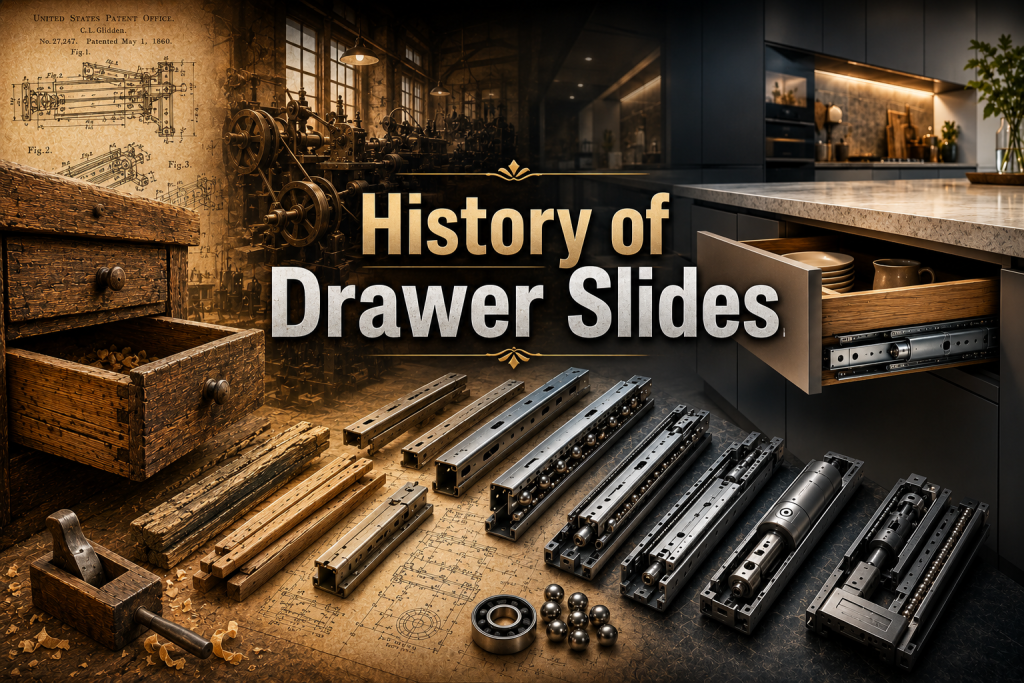

You open a kitchen drawer and it glides out smooth, slow, and silent. It closes the same way. You probably do not think twice about it.
You should.
That quiet motion is the result of 160 years of engineering, competition, and patent battles across three continents.
The drawer slide sitting under your counter connects to a story that starts before the Civil War, runs through Austrian horseshoe factories and California machine shops, and now supports a global market analysts valued at $6.86 billion in 2023 and project to reach $10 billion by 2030. [10]
This is that story.
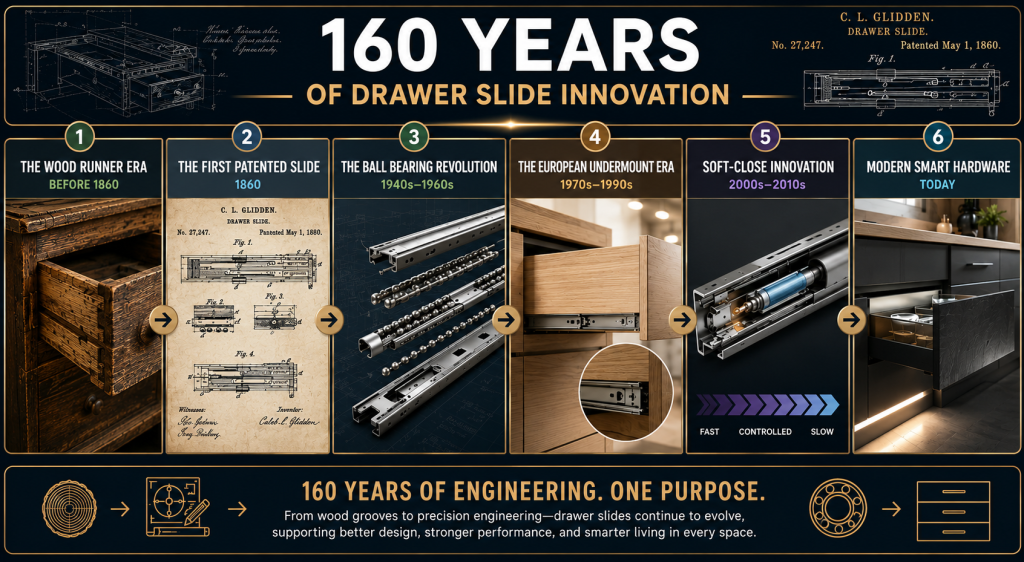
Before Metal: The Wood Runner Era
For most of furniture history, drawers did not slide on hardware. They slid on wood.
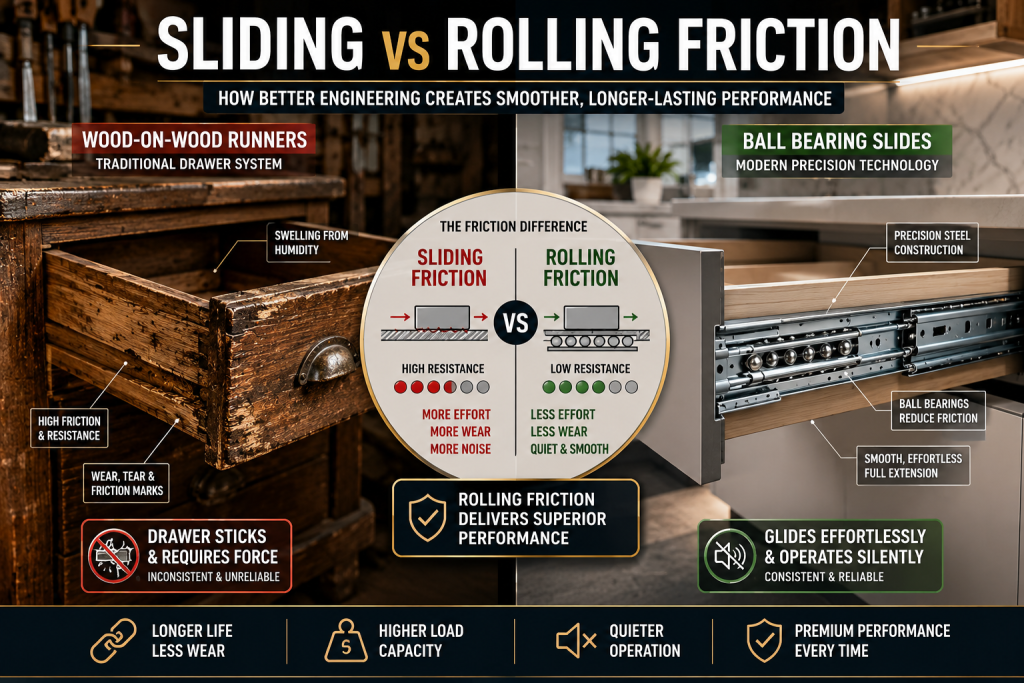
Craftsmen cut dadoes into cabinet sides and fitted drawer frames to ride directly in the groove. The wood-on-wood contact worked well enough when the materials were dry and the joinery was tight. It failed badly when humidity swelled the wood, when the fit was off, or when the drawer carried real weight.
Furniture makers tried wax, tallow, and soap to reduce friction. They adjusted fits seasonally. For centuries, this was the best available solution. It was effective in skilled hands and unreliable in everyone else’s.
The mechanical alternative, an engineered slide using guides, stops, and bearings, had to wait for the industrial age to make the parts cheap enough to manufacture at scale.
1860: The First Patent
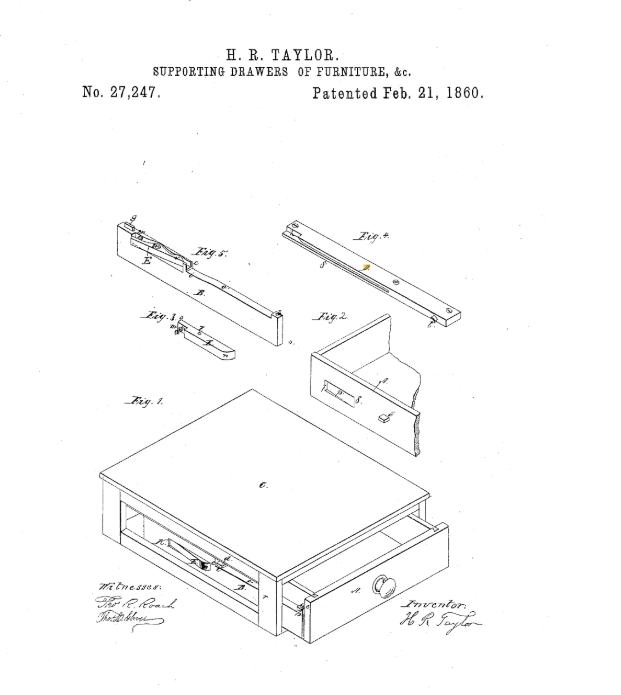
The earliest documented US patent for a mechanical furniture drawer slide dates to 1860. US Patent US27247A describes a pin-and-groove system designed to control drawer travel and prevent over-extension. The mechanism addressed two problems that wooden runners could not solve reliably: keeping the drawer aligned under load, and stopping it from pulling completely out of the case. [1]
This patent did not immediately change furniture manufacturing. Most production furniture in the 1860s still used wood-on-wood construction. But the intellectual groundwork was laid. Engineers had formally recognized that drawer movement was a problem worth solving with precision hardware.
Over the following decades, inventors kept filing. The problem was not just drawer travel. It was load capacity, durability, ease of installation, and cost. No single mechanism solved all four at once until the late 20th century.
The Founding Generation: 1888 to 1962
The companies that still define the drawer slide industry today were founded in a 74-year window between 1888 and 1962. Each one started with something completely different from furniture hardware.
Hettich (1888). Karl Hettich founded his company in Schramberg, Germany in 1888 to produce manual bending machines for clock anchor hooks. The furniture hardware pivot came decades later, in 1930, when Paul Hettich GmbH was established in Herford with a deliberate focus on furniture fittings. [2] That 1930 pivot built the foundation for what is now a company with over 8,200 employees across more than 100 countries and revenues that crossed EUR 1 billion in 2008. [20]
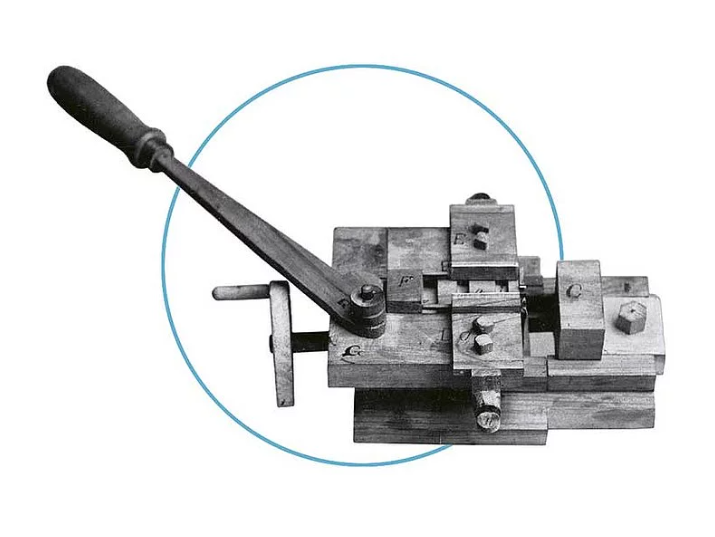
Knape and Vogt (1898). John Knape and Englebert Vogt, German brothers-in-law, founded their manufacturing company in Grand Rapids, Michigan in 1898. They started as a specialty machinery and tool/die shop. Grand Rapids was the furniture capital of the United States at the time, which put K&V inside the ecosystem that would eventually drive demand for precision drawer hardware. [3] The company never left. By 1984, Knape and Vogt was filing patents for self-contained ball bearings engineered specifically for drawer slides, proving the shop had evolved from toolmakers to hardware innovators. [7]
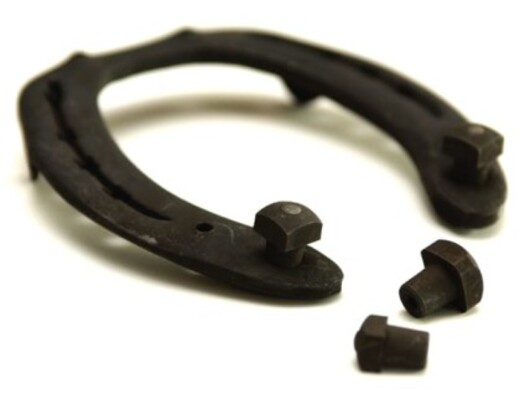
Julius Blum (1952). Julius Blum was a farrier and carriage smith in Hoechst, Austria. He founded Julius Blum GmbH on March 1, 1952, and his first product was a horseshoe stud. Not a drawer slide. Not even a furniture component. A horseshoe stud. [4]
The pivot to furniture hardware came in 1966, when Blum added roller runners to production. By 1977, the company launched the TANDEM drawer runner, a product that set a new benchmark for drawer slide performance across the industry. [4] Today, Blum has applied for more than 2,100 patents and exports 97% of its production to more than 120 countries. [17] The company averaged more than 30 patent applications per year since its founding. That statistic belongs on the short list of most remarkable facts in the furniture hardware industry.
Accuride International (1962). Fred Jordan founded Accuride in South Gate, California in 1962 as a tool and die shop. His first customers were not furniture manufacturers. They were technology companies. Accuride built slides for tape drives and copiers. [5]
That industrial origin mattered. Building slides for data equipment demanded tolerances and load consistency that furniture applications had never required. When Accuride turned those capabilities toward furniture hardware, the result was the Accuride Model 3800, a telescoping ball bearing slide that became the most popular drawer slide in the world. The 3800 established the de facto standard for light-duty slides and still serves as a market reference point today. [8] Accuride now holds nearly 400 enforceable patents and is recognized as the world’s largest designer and manufacturer of sliding hardware. [5]

The Postwar Breakthrough: Ball Bearings Change Everything
World War II accelerated precision manufacturing across every industrial sector. The tolerances required for aircraft parts, weapons systems, and navigation equipment pushed metalworking capabilities well beyond what civilian manufacturing had previously demanded.
That precision transferred. The postwar decades brought ball bearing technology within reach of consumer hardware pricing. Drawer slides were early beneficiaries.
A ball bearing between two metal members eliminates the wood-on-wood friction problem entirely. It replaces a sliding interface with a rolling one. Rolling friction is dramatically lower than sliding friction, which means lighter operation, longer service life, and consistent performance regardless of humidity. The drawer that opened smoothly on day one still opens smoothly after ten years of daily use.
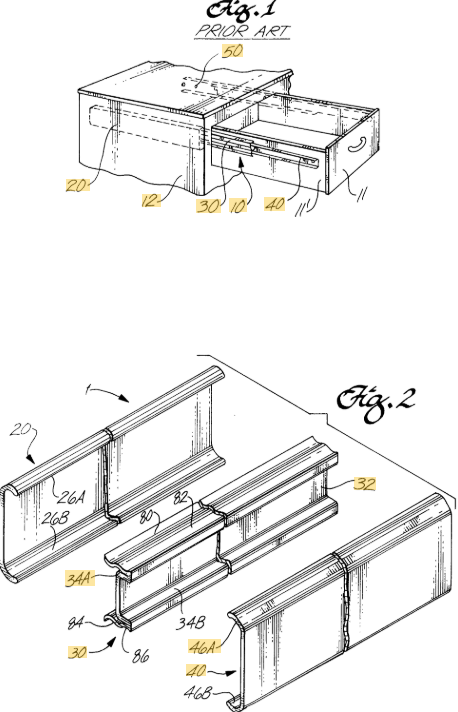
By the 1980s, ball bearing slides were a commercial reality. Knape and Vogt’s 1984 patent for a self-contained bearing engineered specifically for drawer slide use shows the intensity of engineering investment happening at the time. [7] Accuride’s 1992 European patent (EP0541306A1) pushed the technology further, describing a three-part heavy-duty mechanism with a single I-shaped intermediate member and four separate bearing sets. The design achieved superior load capacity without adding thickness to the slide. [18] That combination of strength and profile remains an engineering goal to this day.
Europe Takes the Undermount
While American manufacturers focused on side-mount and telescoping designs, European companies pushed in a different direction.
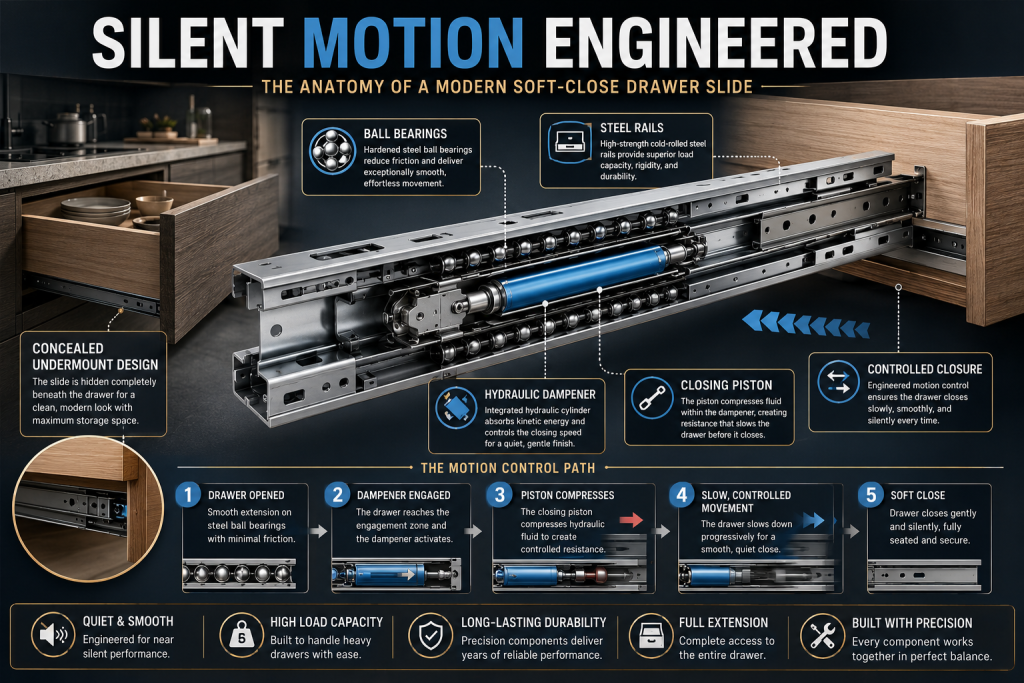
Undermount drawer slides mount beneath the drawer box, completely hidden from view. From the outside, the drawer appears to float. The hardware disappears. This aesthetic demanded a different engineering approach and considerably tighter tolerances than side-mount alternatives.
By the 1980s, undermount slides had become a significant product category. The companies driving that category were almost entirely European: Julius Blum, Paul Hettich, MEPLA-Werke, Hafele, Alfit AG, and Grass GmbH. Self-close functionality was among the first features these manufacturers integrated into undermount designs. [6]
GRASS played a specific role in the broader evolution of soft-close technology. The Austrian company pioneered furniture movement systems for more than 75 years, and its damping systems drove widespread adoption of controlled-closure hardware across both drawer and door applications. [9] GRASS also holds credit for developing the first concealed hinge and inventing the double-wall drawer side, two innovations that shaped how European cabinetry evolved in the final decades of the 20th century. [9]
The European premium positioning created a lasting market dynamic. Today, Europe holds approximately 35% of global drawer slide revenue despite manufacturing a smaller share of total volume than the Asia-Pacific region. [12] The premium product commands premium price and premium margin.
2008: Soft-Close Becomes Standard
Soft-close mechanisms existed in various forms before 2008. What changed in 2008 was formal US patent recognition of the integrated soft-close drawer assembly as a distinct engineered product.
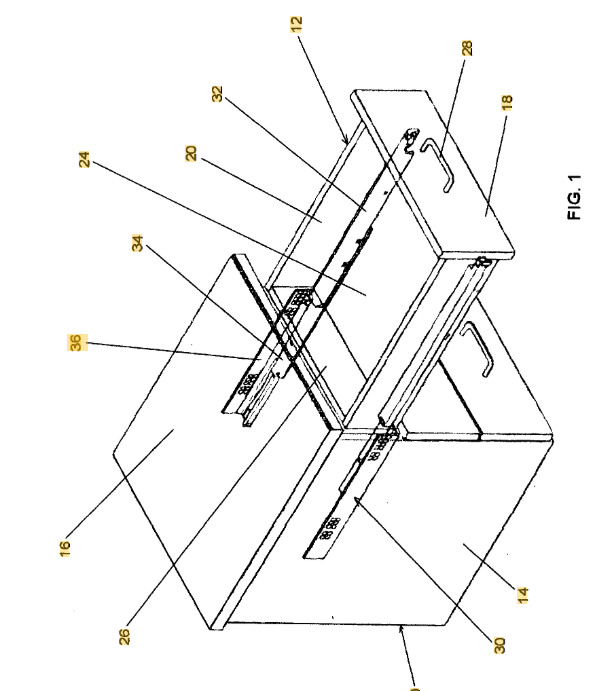
US Patent US8091971B2, filed in 2008, describes a mechanism that controls drawer closure rate to prevent abrupt stops at both the fully open and fully closed positions. [19] The patent turned a luxury feature into a documented engineering category. Once it was formalized, the competitive race to commoditize it began.
Within a decade, soft-close moved from high-end custom kitchens into stock cabinetry at every price point. The mechanism shifted from differentiator to expectation. Today, a buyer researching kitchen cabinets at any budget level finds soft-close listed as a standard specification, not an upgrade.
Push-to-open systems followed a similar path. Global furniture hardware data shows a 39% growth rate in push-to-open system adoption, alongside a 42% rise in concealed hinge adoption. [16] Both trends reflect the same underlying consumer preference: hardware that disappears. The ideal slide is one you never see, never hear, and never think about.
The Market Today
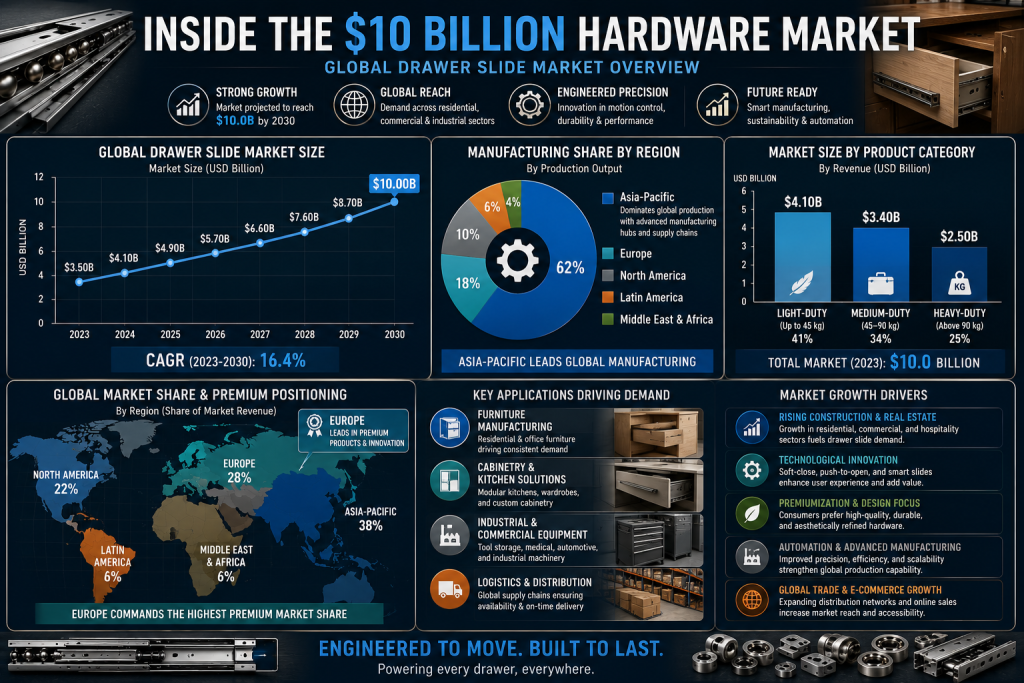
The drawer slide sits inside two larger markets. The global furniture hardware market reached USD 22.85 billion in 2024 and is projected to grow to USD 32.26 billion by 2033. [15] The global furniture market itself was valued at USD 666.5 billion in 2024 and is forecast to approach USD 1.09 trillion by 2034. [21]
Within that context, market research firms estimate the global drawer slides market at between USD 3.5 billion and USD 6.86 billion in 2023-2025, with projections ranging up to USD 10.08 billion by 2030. [10][14] The range reflects differences in scope and methodology across research firms, but the direction is consistent across all of them: growth.
Light-duty slides account for over 40% of the global drawer slides market by product type, with furniture as the dominant application. [13] The Asia-Pacific region accounts for over 60% of global industry volume, with China, India, and Vietnam as the primary manufacturing hubs. [11]
The competitive landscape is more fragmented than most buyers realize. The top four global manufacturers hold only about 20% of total market share. [12] Hundreds of companies compete for the rest. That fragmentation is why buyers encounter an enormous range of quality at similar price points, and why brand pedigree still functions as a meaningful quality signal.
Blum, Hettich, GRASS, and Knape and Vogt built their reputations through decades of documented engineering investment. The market eventually rewarded that investment with category leadership. It also explains why the drawer slide under your kitchen cabinet connects directly to an Austrian horseshoe factory, a California tape-drive shop, and a 1860 patent that most people have never heard of.
Shop Drawer Slides at WoodworkerExpress.com
WoodworkerExpress.com carries drawer slides from Blum, Knape and Vogt, Salice, Hettich, GRASS, and more. Whether you need soft-close undermount slides for a kitchen remodel or heavy-duty ball bearing slides for a shop build, you will find the right hardware in our drawer slide collection.
Sources
- US Patent US27247A (1860). Google Patents / USPTO. https://patents.google.com/patent/US27247A/en
- Hettich Corporate History. https://corporate.hettich.com/en-de/companys-history
- Knape and Vogt Manufacturing Company. Encyclopedia.com / FundingUniverse. https://www.encyclopedia.com/books/politics-and-business-magazines/knape-vogt-manufacturing-company
- Julius Blum GmbH Company History. https://www.blum.com/us/en/company/company-history
- Accuride International. Wikipedia. https://en.wikipedia.org/wiki/Accuride_International
- US Patent Application US20050231083A1. Google Patents. https://patents.google.com/patent/US20050231083A1/en
- US Patent 4,581,799 (Knape and Vogt). Justia. https://patents.justia.com/patent/4581799
- Accuride International About / Company History. https://accuride.com/company/about
- GRASS Company Innovation and Tradition. https://grass.eu/en/about-grass/
- Maximize Market Research, Drawer Slides Market Report. https://www.maximizemarketresearch.com/market-report/drawer-slides-market/187538
- Maximize Market Research, Drawer Slides Market Report. https://www.maximizemarketresearch.com/market-report/drawer-slides-market/187538
- LP Information, Global Drawer Slides Market 2024-2030. https://htfmarketreport.com/reports/4343322-global-drawer-slides-market-6/amp
- LP Information, Global Drawer Slides Market 2024-2030. https://htfmarketreport.com/reports/4343322-global-drawer-slides-market-6/amp
- Persistence Market Research, Drawer Slides Market 2025-2032. https://www.giiresearch.com/report/pmrs1725804-drawer-slides-market-global-industry-analysis-size.html
- Business Research Insights, Furniture Hardware Market 2025-2033. https://www.businessresearchinsights.com/market-reports/furniture-hardware-market-101197
- Global Growth Insights, Furniture Hardware Market Report 2025-2034. https://www.globalgrowthinsights.com/market-reports/furniture-hardware-market-103302
- Wikipedia, Julius Blum GmbH. https://en.wikipedia.org/wiki/Julius_Blum
- European Patent EP0541306A1 (Accuride International). Google Patents. https://patents.google.com/patent/EP0541306A1/en
- US Patent US8091971B2. Google Patents. https://patents.google.com/patent/US8091971B2/en
- Hettich Corporate History. https://corporate.hettich.com/en-de/companys-history
- GM Insights, Global Furniture Market 2024. https://www.gminsights.com/industry-analysis/furniture-market