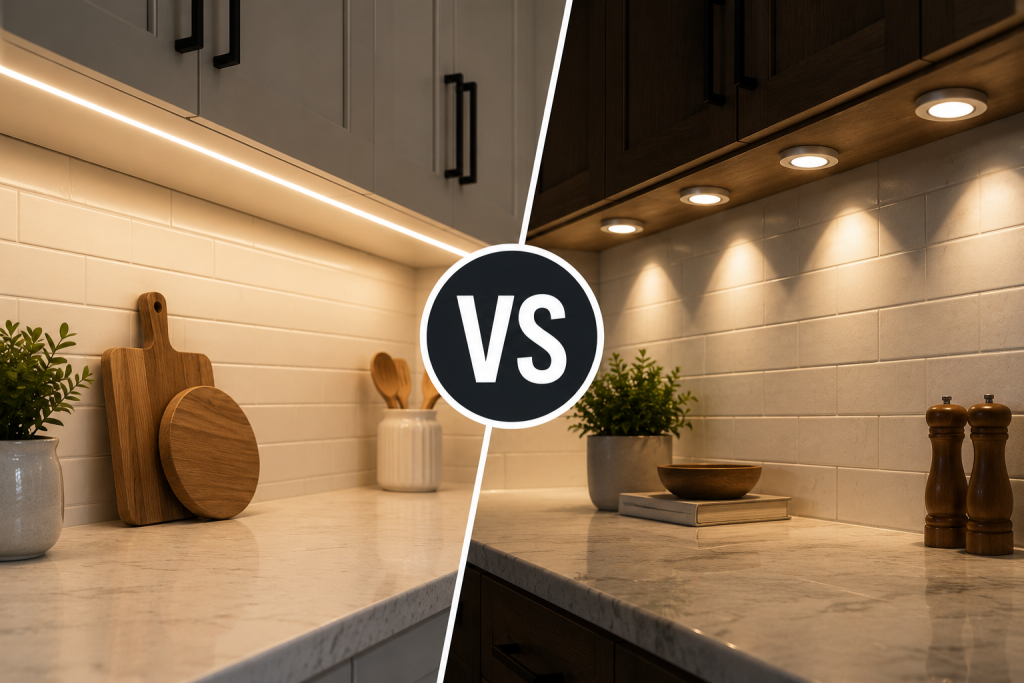

LED strip lights are the better choice for most under-cabinet lighting because they create smooth, even light across the full countertop. Puck lights are better when you want focused light, a decorative spotlight effect, or lighting inside a cabinet, shelf, bar area, or display zone.
Both styles can improve how your room looks and works. The right choice depends on where you need light, how much prep space you want to brighten, and whether you prefer a clean modern glow or a more dramatic accent.
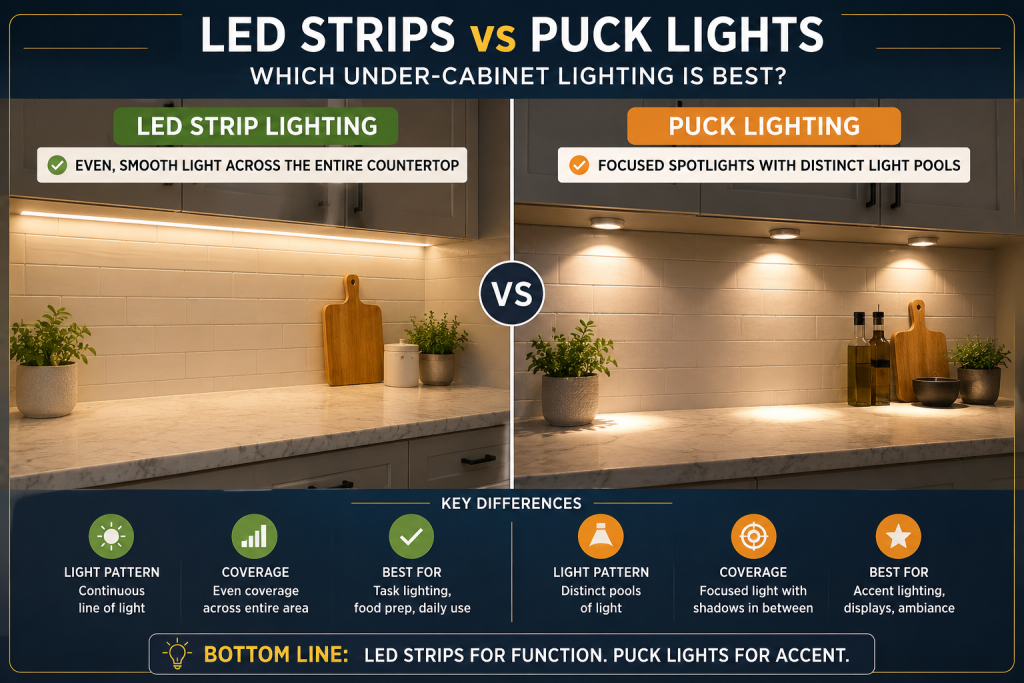
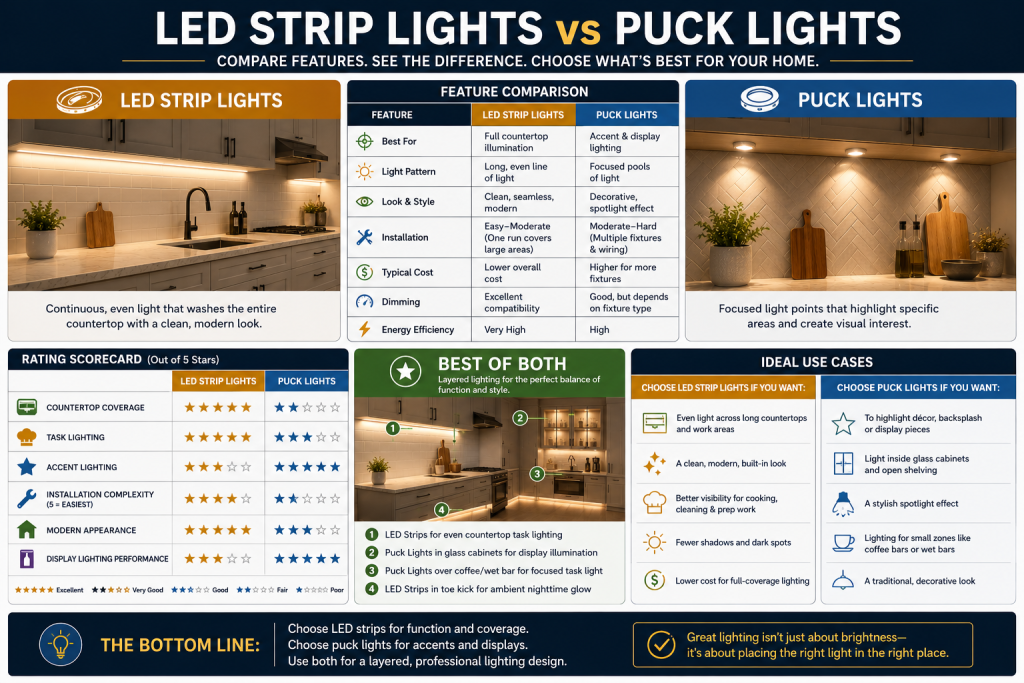
Quick Skim: LED Strip vs Puck Lights
| Feature | LED Strip Lights | Puck Lights |
|---|---|---|
| Best for | Full countertop lighting | Accent and display lighting |
| Light pattern | Long, even line of light | Focused pools of light |
| Look | Clean, modern, low profile | Decorative, spotlight-style |
| Best locations | Under cabinets, toe kicks, shelves, long counters | Glass cabinets, open shelves, coffee bars, small zones |
| Task lighting | Strong choice | Good in small areas |
| Accent lighting | Good | Excellent |
| Installation style | Tape, channel, or low-profile strip | Surface mount or recessed |
| Main drawback | May show LED dots without a diffuser | Can create shadows between lights |
| Best buyer | Homeowners who want bright, even work light | Homeowners who want display lighting or visual drama |
What Is LED Strip Lighting?
LED strip lighting uses a flexible strip or tape with small LED diodes along its length. It can run under a full row of cabinets, inside shelves, along toe kicks, or behind trim.
For rooms, LED strip lights work well because they spread light across the counter instead of creating small bright spots. This makes them a strong choice for food prep, cleaning, reading recipes, and brightening dark corners.
Use LED strip lights when you want:
- Even light across a long countertop
- A clean, built-in look
- Light under several cabinets
- Modern kitchen lighting
- Fewer shadows while you work
- Dimmable lighting for day and night use
For the cleanest look, use a diffuser or channel. This helps soften the light and can reduce visible LED dots on glossy counters.
What Are Puck Lights?
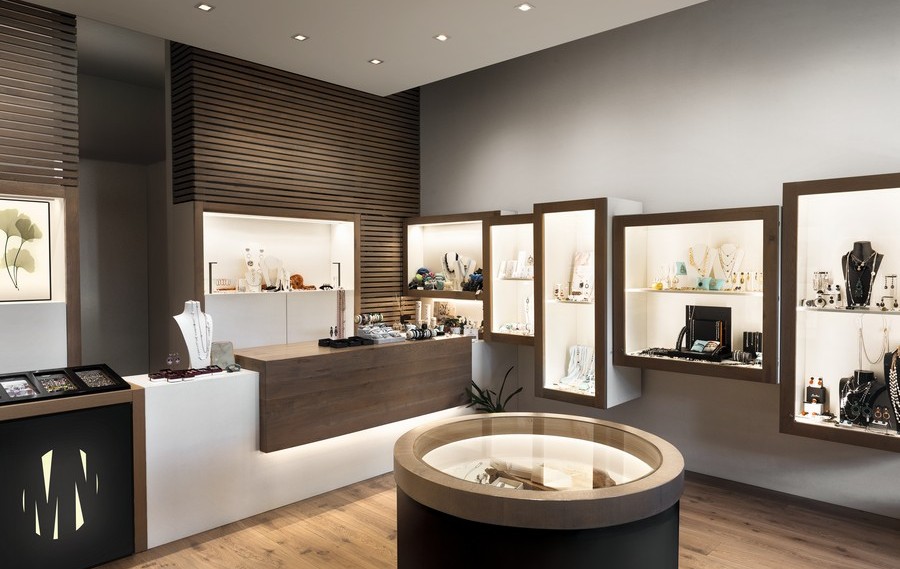
Puck lights are small, round fixtures that mount under cabinets, inside cabinets, or under shelves. They get their name from their hockey-puck shape.
Instead of a long line of light, each puck creates a focused beam. This gives the area below it a spotlight effect. That can look great on a backsplash, inside a glass cabinet, or over a small feature area.
Use puck lights when you want:
- Focused light in one spot
- A decorative lighting effect
- Lighting inside a cabinet
- Light over a coffee bar or small prep area
- Accent lighting for shelves or display pieces
- A traditional under-cabinet lighting look
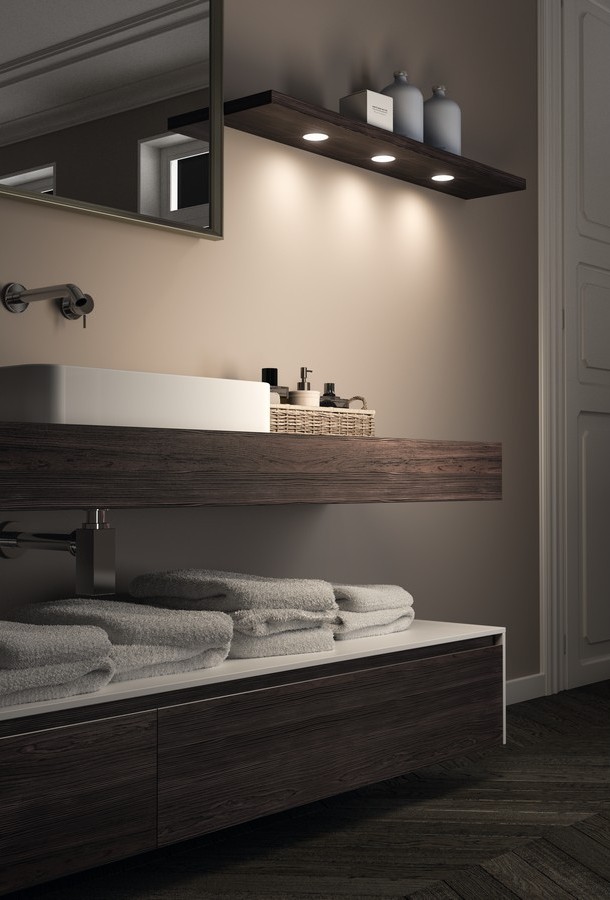
Puck lights can be surface mounted or recessed. Recessed puck lights look more built in, but they usually need more planning and a cleaner cutout.
Which Is Better for Under-Cabinet Lighting?
LED strip lights are better for most under-cabinet lighting because they light the full counter more evenly. If your main goal is to see better while cooking, chopping, cleaning, or using small appliances, choose LED strip lights.
Puck lights are better when looks matter more than full coverage. They can add depth, highlight a backsplash, or make glass-front cabinets and open shelves stand out.
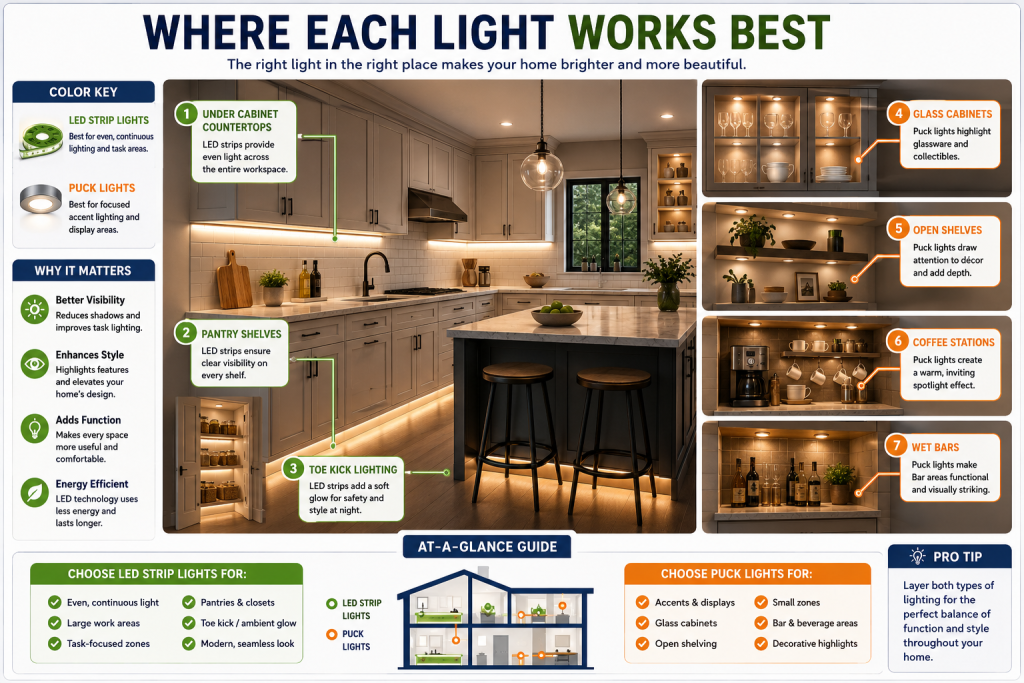
Choose LED Strip Lights If You Want Function First
LED strip lights help solve the most common kitchen lighting problem: dark countertops. Ceiling lights often sit behind you while you work, which can cast shadows on the counter. A strip light mounted under the upper cabinet puts light where you need it.
Best uses:
- Main kitchen counters
- Long cabinet runs
- L-shaped and U-shaped kitchens
- Prep zones
- Laundry rooms
- Workbenches
- Pantry shelves
- Toe-kick lighting
Choose Puck Lights If You Want Accent Lighting
Puck lights work best when you want to draw attention to one area. They create a more styled look, but they do not spread light as evenly across a long counter.
Best uses:
- Glass-front cabinets
- Open shelves
- Wet bars
- Coffee stations
- China cabinets
- Display shelves
- Small under-cabinet zones
- Decorative backsplash lighting
Light Quality: Even Glow vs Spotlight Effect
The biggest difference between LED strip and puck lights is the way they spread light.
LED strip lights create a smooth wash of light. This helps reduce dark gaps and makes the counter easier to use.
Puck lights create circles or cones of light. This can look dramatic, but it may leave darker spaces between each fixture if they are spaced too far apart.
For daily kitchen tasks, even light usually wins. For mood, display, and contrast, puck lights can be the better choice.
Installation: Which Is Easier?
LED strip lights can be easier to run across long cabinet sections because one strip can cover a wide area. Many options use adhesive backing, mounting clips, or channels.
Puck lights can be simple if they are plug-in or battery powered. Hardwired or recessed puck lights take more planning because each light needs correct spacing, wiring, and placement.
Before you buy, check:
- Power source
- Voltage requirements
- Driver or transformer needs
- Dimming compatibility
- Mounting method
- Cabinet depth
- Cord or wire routing
- Switch location
For a polished kitchen upgrade, plan the wiring before installation. Hiding cords and drivers makes the finished project look cleaner.
Placement Tips for Better Results
Good placement matters as much as the light style.
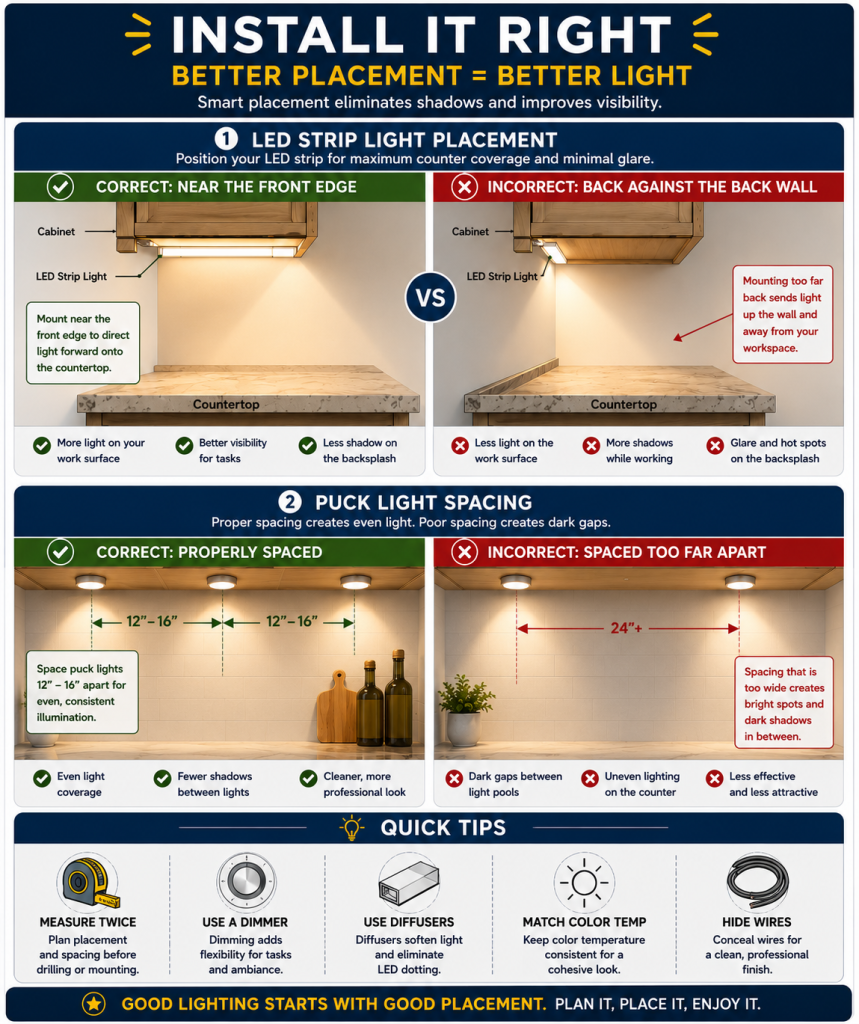
For LED strip lights, mount the strip near the front of the cabinet, not tight against the back wall. This sends more light toward the center of the countertop instead of only lighting the backsplash.
For puck lights, space the fixtures evenly. If they sit too far apart, you may see bright circles under each puck and shadows in between.
Simple placement guide:
| Area | Best choice | Placement tip |
|---|---|---|
| Main countertop | LED strip | Mount near the cabinet front |
| Glass cabinet | Puck light | Place near the front top of the cabinet |
| Open shelf | Either | Use strip for full shelf light, puck for a spotlight |
| Coffee bar | Puck or strip | Use puck for mood, strip for task lighting |
| Toe kick | LED strip | Hide the strip behind trim |
| Pantry | LED strip | Run along shelf or side panel |
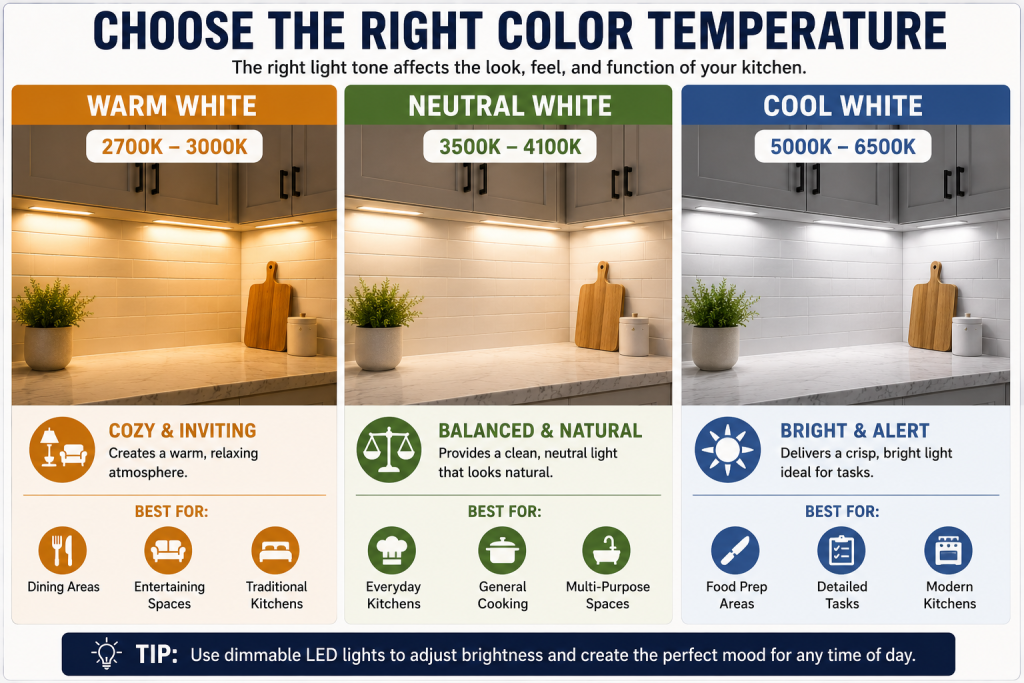
Color Temperature: Warm, Neutral, or Cool?
Color temperature changes how your cabinets, counters, and backsplash look.
Warm white light feels soft and cozy. Neutral white gives a clean, balanced look. Cool white can feel brighter, but it may look harsh in some kitchens.
For most homes, choose:
- 2700K to 3000K for a warm, inviting kitchen
- 3000K to 3500K for a clean, balanced look
- 4000K for a brighter task-focused workspace
Try to match your under-cabinet lights with the rest of your kitchen lighting. Mixing too many color temperatures can make the room feel uneven.
Brightness and Dimming
Brightness matters most in work zones. A dimmer gives you more control, so the same lights can work for food prep, evening mood lighting, or a soft nightlight effect.
Choose brighter output for:
- Food prep areas
- Deep counters
- Dark countertops
- Matte black or dark wood cabinets
- Workbench or utility spaces
Choose softer output for:
- Display cabinets
- Open shelving
- Bars
- Toe kicks
- Accent lighting
A dimmable setup is often the best choice because it gives you both task light and ambient light from one system.
Style: Which Looks Better?
LED strip lights look cleaner and more modern. They hide well under cabinets and give the kitchen a smooth, built-in look.
Puck lights look more decorative. They can add depth and character, especially when lighting textured tile, stone, glassware, or display shelves.
Choose based on your kitchen style:
| Kitchen style | Better option |
|---|---|
| Modern | LED strip lights |
| Minimalist | LED strip lights |
| Traditional | Puck lights |
| Transitional | Either |
| Display-focused | Puck lights |
| Work-focused | LED strip lights |
Can You Use LED Strip and Puck Lights Together?
Yes. Many kitchens look and work best with both.
Use LED strip lights under the main wall cabinets for task lighting. Then use puck lights inside glass cabinets, on open shelves, or above a bar area for accent lighting.
This gives you layered lighting. The strips handle daily function. The pucks add style and focus.
Just make sure the products work together. Check voltage, dimmer type, driver capacity, and color temperature before mixing systems.
Common Mistakes to Avoid
Placing Strip Lights Too Far Back
This lights the backsplash more than the counter. Mount strips closer to the cabinet front for better task lighting.
Spacing Puck Lights Too Far Apart
Wide spacing creates bright spots and shadows. Keep the layout even.
Skipping a Diffuser
A diffuser helps soften LED strip lighting. It also helps hide visible diode dots on glossy stone, quartz, or polished counters.
Ignoring Color Temperature
A warm kitchen with cool under-cabinet lights can feel mismatched. Match the tone to your room.
Forgetting the Power Supply
Drivers, transformers, cords, and switches need a place to go. Plan them before you start.
Final Verdict: LED Strip vs Puck Lights?
Choose LED strip lights if you want the best all-around under-cabinet lighting. They give you cleaner lines, better countertop coverage, and a more useful work surface.
Choose puck lights if you want focused accent lighting, display lighting, or a more decorative spotlight effect.
For most kitchens, the best setup is simple: use LED strip lights for the main counters and puck lights for special areas.
Shop Cabinet Lighting at Woodworker Express
Woodworker Express carries cabinet lighting and hardware solutions that help you finish kitchen, bath, closet, pantry, and built-in projects with a cleaner, more useful result. Whether you are upgrading a few cabinets or planning a larger remodel, the right lighting can make your space easier to use and better to look at every day.