
The best way to hide kitchen appliances is to use appliance garages, mixer lifts, pull-out shelves, or hidden cabinet storage.
Appliance garages keep daily essentials within reach. Mixer lifts make heavy appliances easier to use. Pull-out organizers free up counters by putting less-used items behind cabinet doors.
You don’t need a full kitchen remodel to make a difference. With the right cabinet hardware and storage solutions from Woodworker Express, you can give your coffee maker, blender, stand mixer, and other appliances a home without losing easy access.
Quick Skim: Best Ways to Hide Kitchen Appliances
| Storage solution | Best for | Main benefit |
|---|---|---|
| Appliance garage | Coffee makers, blenders, toasters | Hides appliances on the countertop |
| Tambour door kit | Custom countertop storage | Roll-up door needs no front swing space |
| Appliance or mixer lift | Heavy stand mixers, food processors | Raises appliances from a base cabinet |
| Pull-out shelves | Air fryers, slow cookers, rice cookers | Makes deep cabinets easy to access |
| Pocket or flipper doors | Coffee bars, breakfast stations | Conceals an entire appliance area |
| Lift-up cabinet doors | Small appliance stations | Keeps cabinet doors out of the way |
| Corner cabinet organizers | Bulky, less-used appliances | Makes hard-to-reach corners useful |
Our recommendation: Start with an appliance garage for daily countertop clutter, a mixer lift for heavy equipment, or pull-out shelves for appliances you use a few times a week.
1. Install an Appliance Garage for Everyday Essentials
Best for: Coffee makers, blenders, grinders, and other frequently used appliances
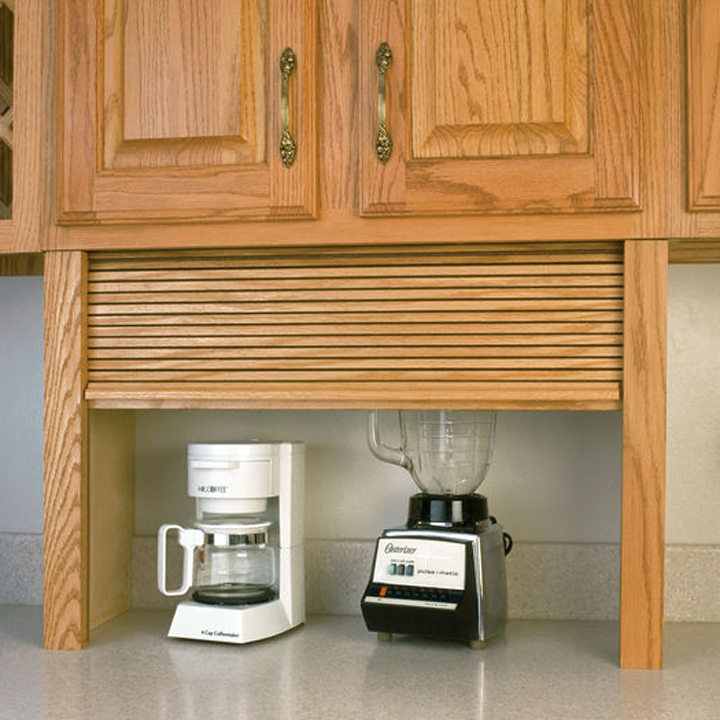
An appliance garage is one of the easiest ways to hide small kitchen appliances while keeping them close at hand.
These compact storage units sit on your countertop, often beneath an upper cabinet. A door closes over your appliances when they’re not in use. Open it, and everything is right where you need it.
Choose a Straight or Corner Appliance Garage
Straight appliance garages work well along a kitchen wall or beside tall cabinets. Corner appliance garages make use of countertop corners that often collect clutter.
Woodworker Express carries Omega National Products appliance garages in wood species such as maple, cherry, red oak, hickory, and alder.
You can choose from solid wood and veneer options to suit your cabinet style.
Why Choose a Tambour Door?
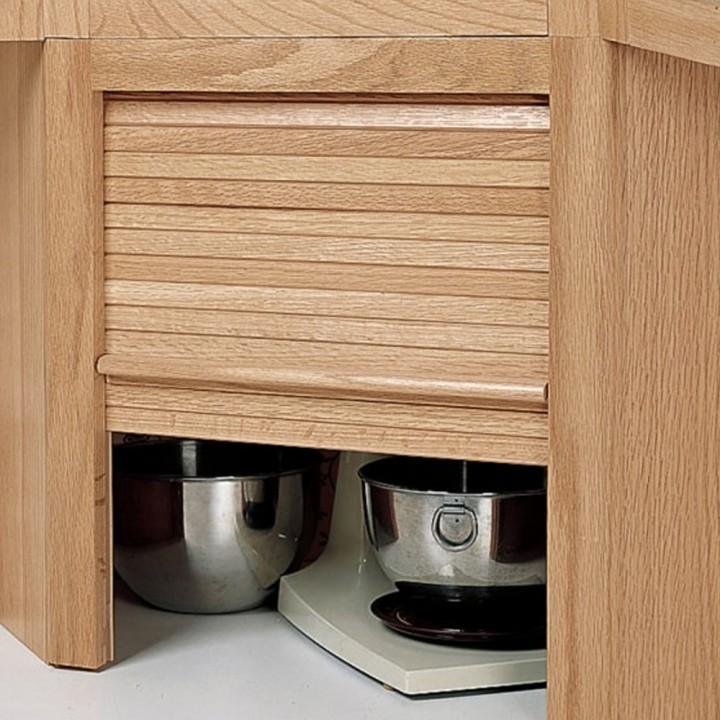
A tambour door uses narrow slats that roll along a track. You slide it upward to open the garage and pull it down to hide the contents.
Unlike a standard hinged door, a tambour door does not swing into your workspace. This makes it a practical choice near a sink, refrigerator, or busy prep area.
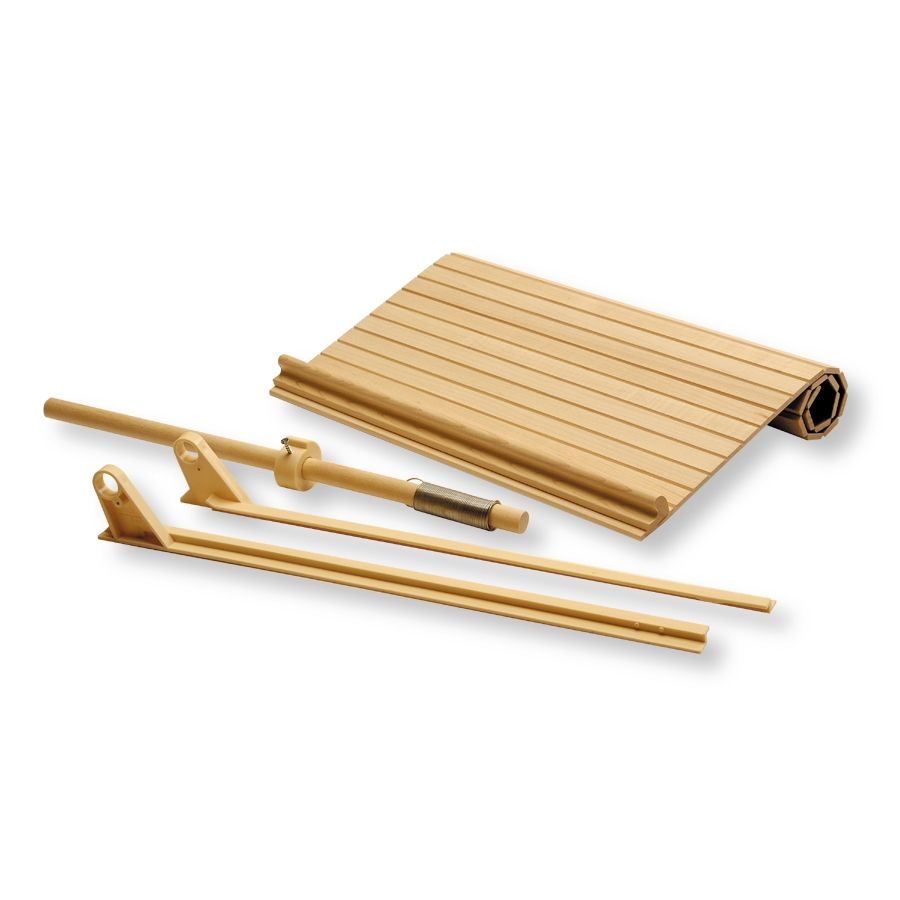
Woodworker Express offers tambour doors and track systems for custom cabinet projects.
Keep in mind: An appliance garage hides visual clutter, but it does not restore the countertop space beneath it. Choose a spot where you can spare some surface area.
2. Use an Appliance Lift to Hide Heavy Stand Mixers
Best for: Stand mixers and other heavy countertop appliances
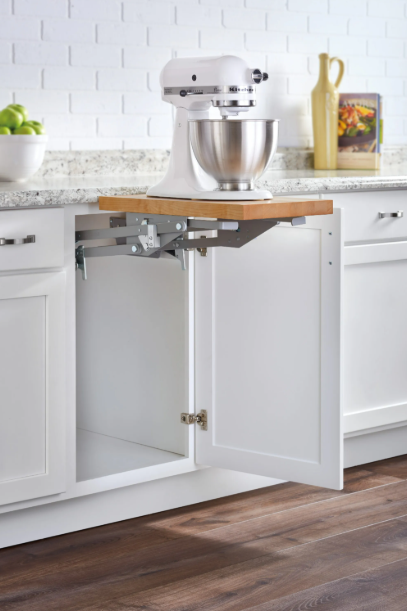
A stand mixer can be too heavy to move in and out of a cabinet each time you bake. An appliance lift solves this problem by bringing the appliance up to a convenient working height.
An appliance lift mounts inside a full-height base cabinet. When you open the cabinet, a spring-assisted mechanism helps raise a shelf and its contents toward counter height. After use, you lower the shelf back into the cabinet.
This lets you hide a heavy mixer without lifting it onto your counter.
Consider a Rev-A-Shelf Heavy-Duty Mixer Lift
Woodworker Express carries several Rev-A-Shelf appliance lifts.
For example, the Rev-A-Shelf RAS-ML-HDSC heavy-duty soft-close lift offers:
- A weight rating of up to 60 pounds
- Spring-assisted lifting with adjustable tension
- Soft-close dampeners for controlled lowering
- A design that accepts a custom-made shelf
The mechanism requires a full-height base cabinet and adequate mounting space. The RAS-ML-HDSC does not include a shelf.
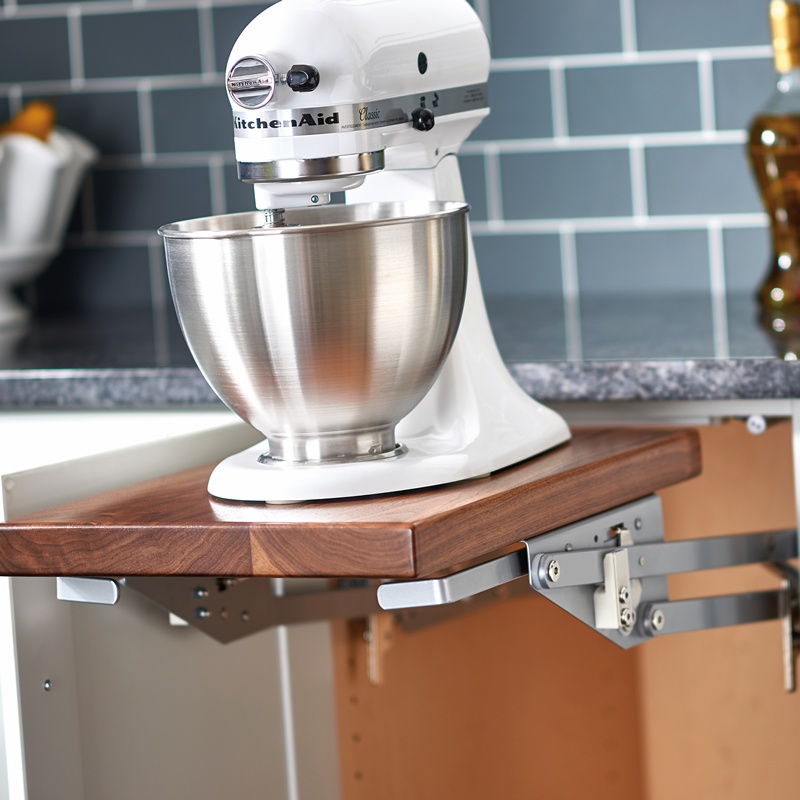
If you prefer a complete setup, Woodworker Express also offers a Rev-A-Shelf appliance lift kit with a maple shelf, designed for an 18-inch face-frame base cabinet.
Buying tip: Check whether your lift includes a shelf. Some kits include only the lifting hardware, while others include the shelf and soft-close mechanism.
Also confirm that the appliance fits when the lift is lowered and that the cabinet door can open fully.
3. Add Pull-Out Shelves to Store Appliances Above or Below the Counter
Best for: Air fryers, slow cookers, rice cookers, and occasional-use appliances
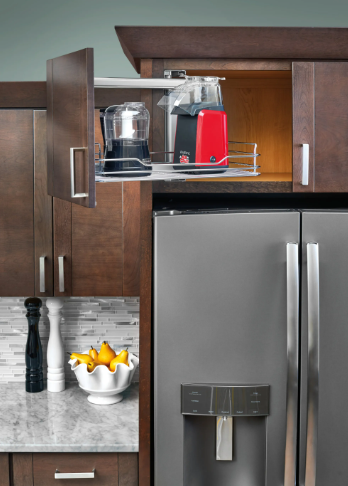
Pull-out shelves are a great choice when you want to clear your counters without adding a countertop cabinet.
Instead of reaching into a deep cabinet, you slide the shelf toward you. This makes it easier to see, grab, and put away your appliances.
A pull-out shelf works especially well for appliances that you use once or twice a week.
What to Look for in a Pull-Out Shelf
Choose a shelf with a solid, stable base that supports the appliance’s full footprint.
For heavier items, consider full-extension slides. They bring the shelf farther out so you can reach the appliance without bending deep into the cabinet.
Woodworker Express carries pull out organizers and drawer slides for both cabinet upgrades and custom storage projects.
Look for these features when choosing hardware:
- Full extension: Easier access to the back of a cabinet
- Suitable load rating: Supports the shelf, appliance, and other stored items
- Soft-close action: Helps prevent hard closing and sudden movement
- Proper mounting: Keeps the shelf stable when extended
Remember to check the complete shelf system’s load rating, not just the slide rating.
Important: A pull-out shelf does not automatically make it safe to run an air fryer or toaster oven inside or directly beside a cabinet. Move the appliance to a suitable work surface and follow its instructions for ventilation and heat clearance.
4. Hide Kitchen Appliances With Pocket Doors and Flipper Doors
Best for: Coffee bars, breakfast stations, countertop appliance cabinets, and custom kitchen storage
Pocket doors and flipper doors let you conceal kitchen appliances behind cabinet panels without leaving doors in the way while you work.
Both use specialized sliding hardware to move cabinet doors out of the opening. This makes them useful for hiding coffee makers, espresso machines, blenders, and other appliances that need frequent access.
The main difference is where the doors go when you open the cabinet.
Pocket doors: Hide appliances behind retractable cabinet doors
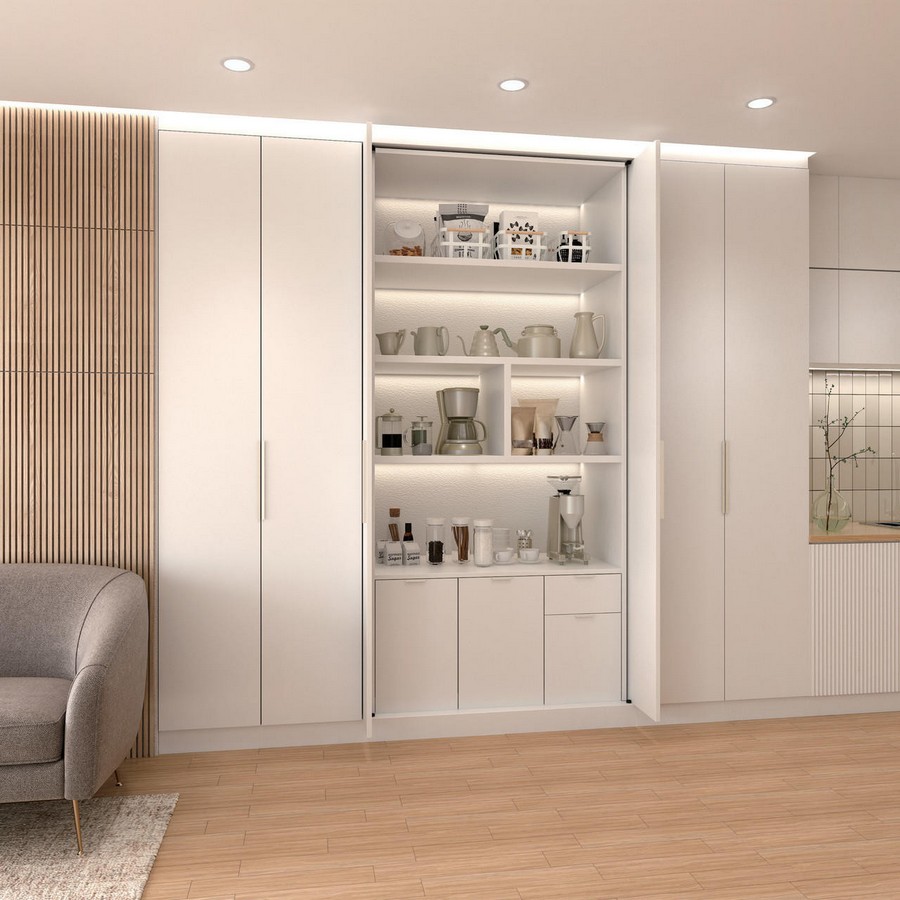
Pocket doors typically swing open and then slide into spaces along the sides of a cabinet. When fully retracted, the doors stay out of the way, giving you access to the appliance storage area.
This makes pocket doors a practical choice for:
- Hidden coffee bars with espresso machines and grinders
- Breakfast stations with toasters and coffee makers
- Full-height cabinets that conceal countertop appliances
- Custom cabinets that blend into the rest of the kitchen
For larger custom projects, Woodworker Express offers Blum REVEGO pocket door systems. These slide-in systems use dedicated side pockets to conceal single or double doors.
They allow you to create a hidden appliance station with a clean cabinet front when the doors are closed.
Buying tip: Pocket doors need room beside the cabinet opening for the doors and their hardware. Check the manufacturer’s required dimensions before planning the cabinet layout.
Flipper doors: Lift and slide the door out of the way
Flipper doors work differently. Instead of retracting into a side pocket, a typical flipper door swings upward and then slides back into the cabinet above the opening.
This keeps the door overhead rather than extending into the kitchen.
Flipper doors work well for:
- Small appliance cabinets built into upper cabinetry
- Compact coffee and breakfast stations
- Cabinets where side pocket space is limited
- Custom storage that needs a retractable overhead door
A flipper door gives you access to the cabinet without requiring room for an outward-swinging door while the station is in use.
Unlike a basic lift-up door that stays raised, a flipper door retracts into the cabinet. This can help keep the open door less visible.
Buying tip: Check the space above the cabinet opening. Flipper door slides need adequate depth and clearance for the door to retract.
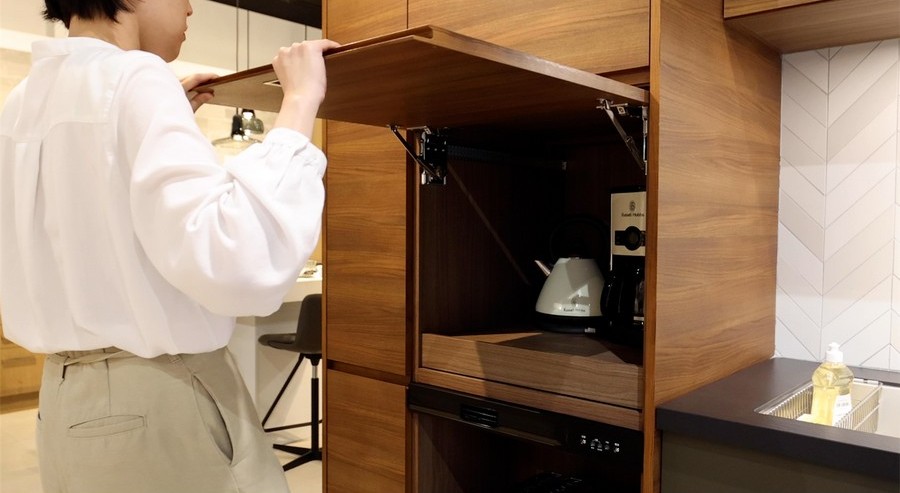
5. Use Lift-Up Cabinet Doors for Easy Access
Best for: Custom appliance cabinets and compact countertop stations
Lift-up cabinet doors open upward rather than swinging outward.
This can make an appliance cabinet easier to use when a standard door would block your workspace or bump into another cabinet.
You can add lift-up door hardware to a suitable custom cabinet and create a clean look that matches the rest of your kitchen.
Woodworker Express offers cabinet lift systems from brands such as Blum, Grass, and Salice.
Options include the Blum AVENTOS line, which offers different opening styles for various cabinet sizes and door designs.
How is a Lift-Up Door Different from an Appliance Lift?
These two products solve different problems.
A cabinet door lift system raises the cabinet door so you can reach what’s inside.
An appliance lift raises a shelf and the appliance resting on it.
If you want to hide a coffee maker behind an upward-opening panel, look at cabinet lift hardware. If you want to bring a heavy mixer out of a base cabinet, choose an appliance lift.
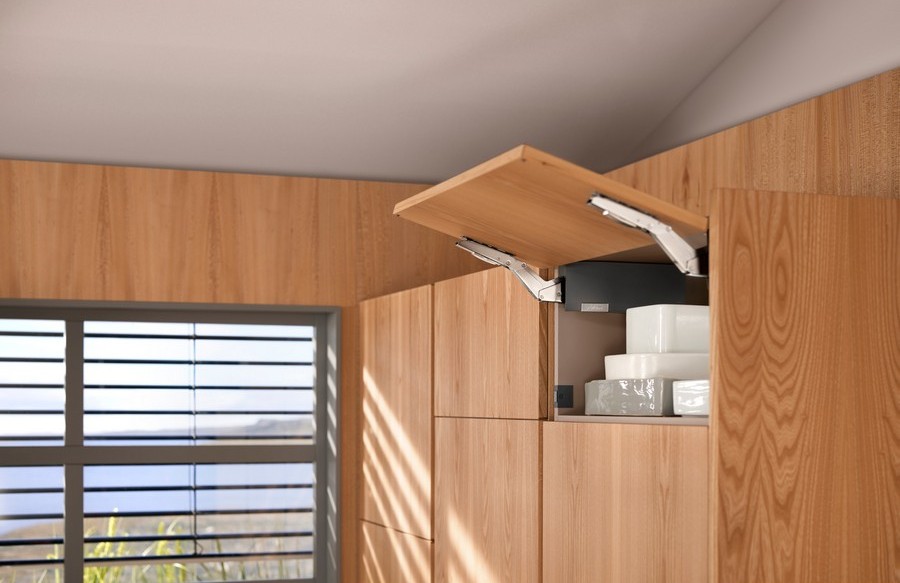
6. Make Better Use of Corner Cabinets
Best for: Blenders, food processors, and bulky appliances used less often
Kitchen corner cabinets often have plenty of room but poor access.
A standard shelf can leave appliances buried behind other items. Corner cabinet organizers solve this problem by rotating or moving stored items toward the cabinet opening.
Choose the Right Corner Organizer
A Lazy Susan rotates to bring items within reach. It works well when you want to store several smaller appliances or kitchen accessories.
A blind corner pull-out brings trays or shelves out of a deep corner. This can be a better fit for heavier items that are hard to reach.
Woodworker Express offers Lazy Susans in several shapes, including kidney, pie-cut, D-shaped, and half-moon designs.
You can also browse blind corner cabinet organizers, including Kesseböhmer LeMans and other swing-out or pull-out systems.
Buying tip: Measure the cabinet opening, not just the space inside. A wide appliance may fit on a corner shelf but still be difficult to remove through a narrow opening.
Check the tray’s load rating and the appliance’s height before buying.
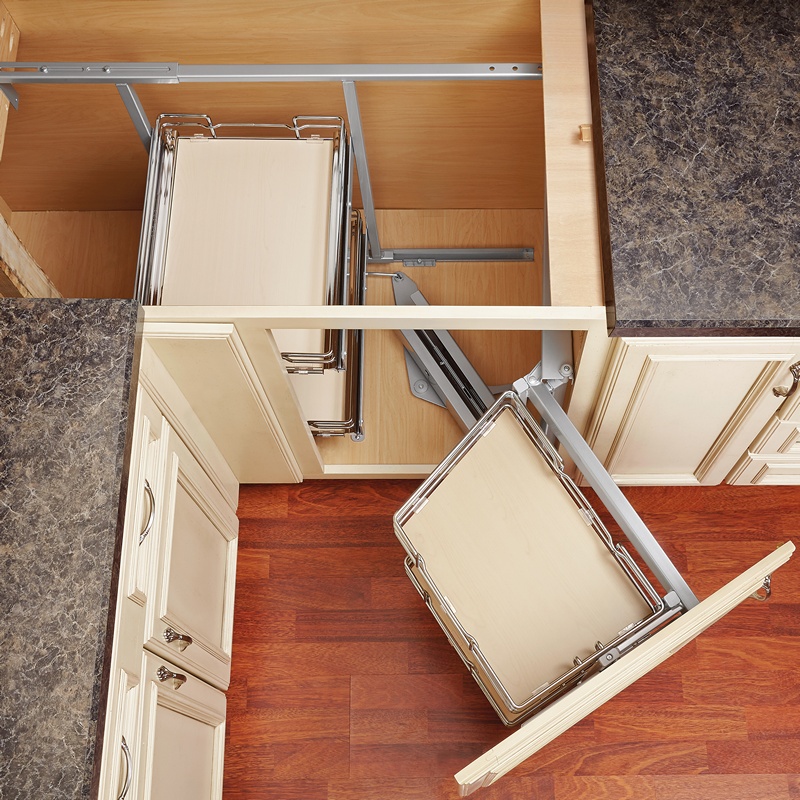
7. Hide Appliances in a Pantry or Deep Drawer
Best for: Waffle makers, hand mixers, slow cookers, and seasonal appliances
Not every appliance needs special hardware.
If you have a pantry or deep kitchen drawers, you may already have the space to keep your countertops clear.
Use lower drawers for heavier items and easy-to-reach pantry shelves for appliances you use often.
Keep lightweight, seasonal equipment on higher shelves.
One simple rule makes appliance storage easier: the more often you use something, the easier it should be to reach.
There’s little benefit in hiding your daily coffee maker on a top pantry shelf if you have to use a step stool every morning.
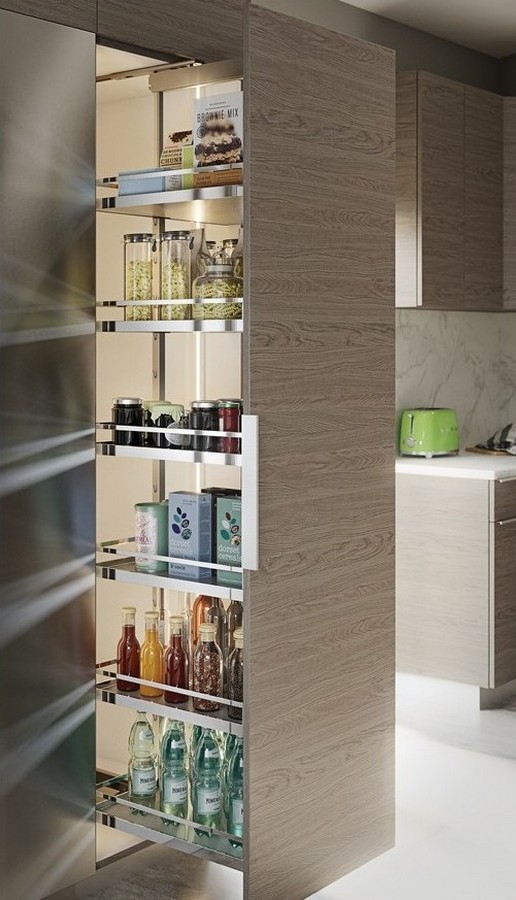
Before You Buy: 5 Checks That Prevent Storage Mistakes
A storage solution only works if your appliance fits, moves easily, and stays safe. Before ordering cabinet hardware, make these five checks.
1. Measure the Appliance in its Storage Position
Record its width, height, and depth. Include handles, cords, lids, and attachments that remain in place during storage.
For a stand mixer, check whether the head tilts or the bowl needs to rise. For a coffee maker, check the space needed to fill the water tank.
2. Measure the Usable Cabinet Opening
A cabinet’s listed size is not always its clear opening.
Face frames, hinges, door tracks, and mounting brackets can reduce the space available.
For example, a mixer lift may require a minimum opening width of 12 inches even though the system occupies a larger space inside the cabinet.
Always compare the manufacturer’s required opening dimensions with your actual cabinet.
3. Check How the Appliance Moves
Think beyond whether the appliance fits on a shelf.
Can you lift it out without hitting the upper cabinet? Does a pull-out shelf clear the door hinges? Can an appliance lift travel through its full range?
Also consider where you’ll set the appliance when you take it out.
A storage spot across the kitchen from your prep counter may create more work than it saves.
4. Plan for Heat, Steam, and Electrical Safety
Hiding an appliance is not the same as safely operating it inside a cabinet.
Air fryers, toasters, toaster ovens, and other heat-producing appliances need the clearance specified in their manuals.
Steam from kettles, coffee makers, and pressure cookers can also damage cabinet finishes.
Never operate an appliance behind a closed cabinet door unless the appliance and enclosure are specifically designed and approved for that use. Do not assume that opening the door provides enough clearance.
If you want built-in power, consult a qualified electrician about safe, code-compliant outlet placement. Avoid pinching cords behind doors or routing extension cords through cabinet openings.
5. Check the Total Load and What’s Included
The weight of an appliance is only part of the load.
For pull-out shelves, include the weight of the shelf and other stored items. For mixer lifts, follow the manufacturer’s rated capacity and installation instructions.
Some products include mounting hardware, slides, and shelves. Others require separate parts.
Checking this before you order helps prevent delays and unexpected costs.
Which Kitchen Appliances Should You Hide?
The best storage choice depends on the appliance itself.
| Appliance | Recommended storage | Why it works |
|---|---|---|
| Coffee maker | Appliance garage or pocket door station | Easy daily access |
| Stand mixer | Heavy-duty appliance lift | Less heavy lifting |
| Blender | Appliance garage or pull-out shelf | Quick access without visible clutter |
| Air fryer | Deep drawer or pull-out shelf | Keeps a bulky appliance off the counter |
| Toaster | Appliance garage | Easy to store after cooling |
| Slow cooker | Base cabinet or pantry pull-out | Good for occasional use |
| Espresso machine and grinder | Pocket door coffee station | Keeps related supplies together |
| Food processor | Pull-out shelf or corner organizer | Makes bulky parts easier to reach |
For many kitchens, a mix of two storage solutions works better than one large cabinet.
An appliance garage can handle daily items while a base cabinet pull-out holds less-used equipment.
Final Takeaway: How to Hide Kitchen Appliances
You don’t have to give up your favorite kitchen tools to enjoy clear countertops.
Choose an appliance garage for small appliances you want nearby but out of sight. Choose an appliance lift for heavy mixers that are hard to move. Choose pull-out shelves or corner organizers to make better use of existing cabinets.
For a larger kitchen upgrade, pocket doors and lift-up cabinet hardware can create a hidden appliance station that matches your kitchen design.
Start with the appliances that take up the most space. Measure them, think about how often you use them, and choose storage that makes your daily routine easier.
Ready to organize your kitchen? Explore appliance garages, cabinet hardware, and kitchen storage solutions at Woodworker Express to find the right fit for your space.