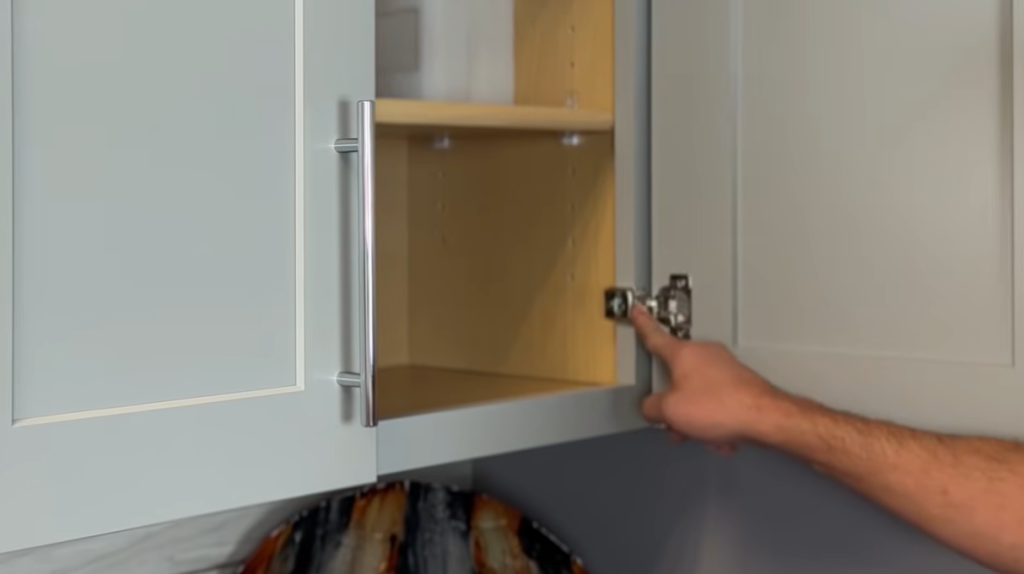

A cabinet door that won’t stay closed usually has a simple fix. Start by tightening loose hinge screws and adjusting the hinges if possible. If the door still pops open, add a magnetic catch. When an old or damaged hinge no longer works correctly, replacing the hinge may be the best solution.
You can solve many cabinet door problems with a screwdriver and a few minutes of troubleshooting.
Quick Skim: How to Keep a Cabinet Door Closed
| Problem | Best Fix | Difficulty |
|---|---|---|
| Something blocks the door | Remove or reposition the obstruction | Easy |
| Door feels loose or sags | Tighten hinge screws | Easy |
| Door sits crooked or sticks out | Adjust the cabinet hinges | Easy |
| Door closes but will not stay shut | Install a magnetic catch | Easy |
| Door pushes itself open or hinge is worn | Replace the cabinet hinges | Moderate |
Fix #1: Adjust the Cabinet Hinges
If your cabinet has adjustable hinges, start here.
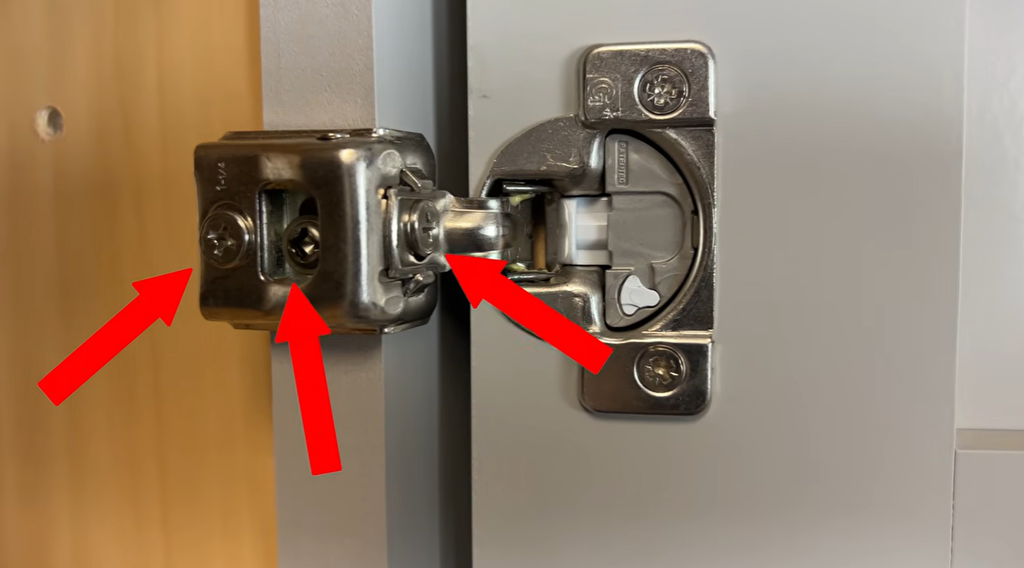
Many concealed cabinet hinges have adjustment screws that let you change the position of the door. Depending on the hinge, you may be able to move the door:
- Up or down
- Left or right
- In or out from the cabinet
These small changes can make a big difference.
A door that sits too far forward may spring back open. Two doors that overlap may prevent each other from closing. A door that sits too low may rub against the cabinet frame.
How to Adjust Cabinet Hinges
Open the cabinet door and look closely at the hinges.
If you see adjustment screws on the hinge arm or mounting plate, use a screwdriver to make small changes. Adjust one direction at a time.
Turn the screw a small amount, close the door, and check the fit. Repeat until the door sits straight and closes without resistance.
Avoid making several large adjustments at once. Small changes make it easier to see which adjustment fixed the problem.
For a more detailed walkthrough, see our guide on How to Adjust Cabinet Hinges in 5 Easy Steps.
When Hinge Adjustment Works Best
Adjusting the hinges is a good first fix when:
- The cabinet door sits crooked
- The gaps around the door look uneven
- Two cabinet doors rub or overlap
- One corner sticks out
- The door closes but does not sit flush
If your hinges do not have adjustment screws, or adjustments do not solve the problem, try the next option.
Fix #2: Install a Magnetic Cabinet Catch
Sometimes a cabinet door closes almost all the way but refuses to stay there.
A magnetic cabinet catch can provide the extra holding force you need.
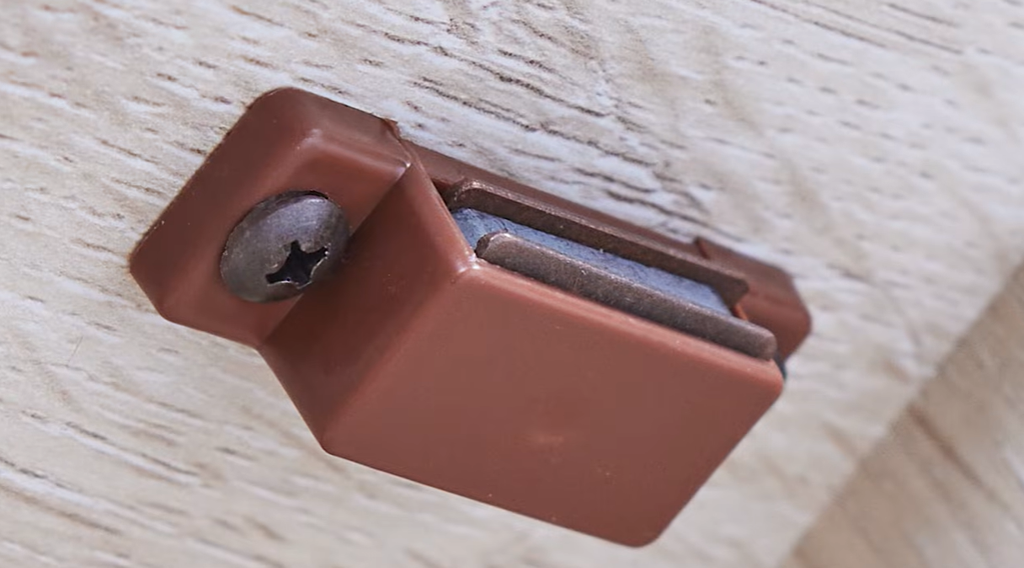
Magnetic catches are simple pieces of cabinet hardware. The magnet mounts inside the cabinet, while a metal strike plate mounts to the door. When the door closes, the magnet grabs the plate and holds the door shut.
When Should You Use a Magnetic Catch?
A magnetic catch can work well when:
- Your hinges are not adjustable
- The door closes but slowly drifts open
- The existing hinges still move smoothly
- You want an inexpensive fix
- A small amount of extra holding force solves the problem
Magnetic catches can also help with older cabinets where replacing every hinge is not your first choice.
How to Install a Magnetic Catch
Most surface-mounted magnetic catches are straightforward to install.
- Choose a spot inside the cabinet where the catch will not interfere with shelves or stored items.
- Position the magnetic catch against the cabinet frame or box.
- Mark and install the mounting screws.
- Position the strike plate on the inside of the cabinet door.
- Make sure the magnet and strike plate meet when the door closes.
- Secure the strike plate.
- Close the door several times and adjust the position if needed.
Alignment matters. If the strike plate misses the magnet, the catch will not hold the door properly.
Choosing the Right Magnetic Catch
Consider the size and weight of the cabinet door.
A standard magnetic catch may be enough for a typical kitchen or bathroom cabinet. Larger or heavier doors may need a heavy-duty magnetic catch with more holding force.
Woodworker Express carries magnetic cabinet catches in several sizes and styles, making them an easy option when your hinges alone do not keep the door closed.
Fix #3: Replace Worn or Damaged Cabinet Hinges
What if the cabinet door still pushes itself open after you adjust it or add a catch?
Take another close look at the hinge.
An old hinge may have worn internal parts, damaged springs, broken plastic pieces, corrosion, or years of buildup. At some point, adjustment will no longer solve the problem.
That is when replacement makes more sense.
Signs You May Need New Cabinet Hinges
Consider replacing the hinges if:
- The hinge feels loose even when the screws are tight
- The hinge will not hold an adjustment
- Parts of the hinge are cracked or broken
- The hinge is rusty or heavily corroded
- The door pushes open with noticeable force
- The hinge does not move smoothly
- A magnetic catch cannot overcome the pressure from the hinge
A worn hinge can fight against the door every time you close it. Replacing the bad hardware fixes the cause instead of forcing the door shut.
How Do You Find a Replacement Cabinet Hinge?
Finding the right cabinet hinge can be harder than installing it.
Older hinges may be discontinued, and two hinges that look similar can have different overlays, mounting patterns, or door applications.
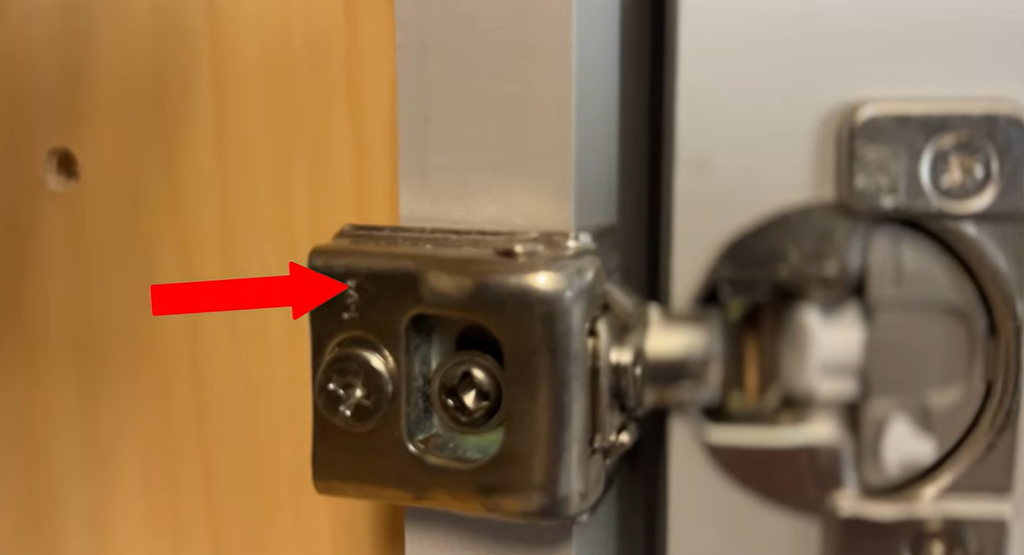
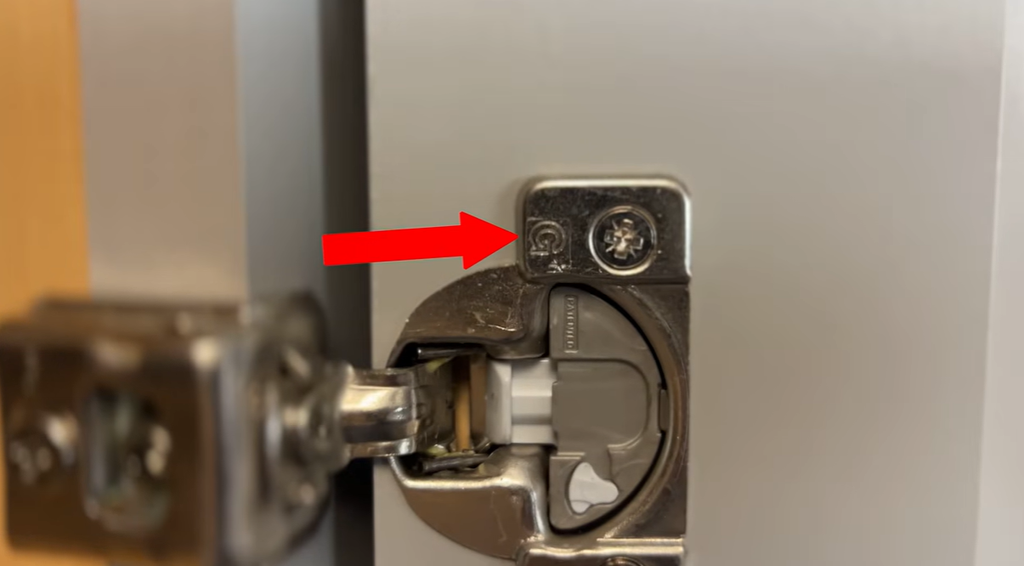
Start by removing or closely inspecting the existing hinge. Look for:
- Brand names
- Logos
- Letters
- Numbers
- Model markings
For example, a marking may identify the hinge manufacturer and help narrow down the correct replacement.
You can also browse cabinet hinges by style and application at Woodworker Express.
Use Woodworker Express Free Hinge Matching Assistance
Still not sure which hinge you have?
Woodworker Express offers FREE Hinge Matching Assistance to help you identify the correct replacement.
Gather the information you can find on your existing hinge and submit the requested details through the hinge matching service. Our team can help narrow down a replacement that works with your cabinet.
This service is especially useful when you have an older hinge with unfamiliar markings or cannot find an obvious match online.
When replacing worn hinges, replacing all hinges on the same door can also help the door move and align consistently.
Common Mistakes When Fixing a Cabinet Door That Won’t Close
Adjusting the Hinges Before Checking Inside the Cabinet
Always check for an obstruction first. There is no reason to spend time adjusting hardware when a cereal box is pushing the door open.
Turning Adjustment Screws Too Far
Make small adjustments and test the door after each change. Large changes can create a new alignment problem.
Overtightening Mounting Screws
A secure screw is good. A stripped screw hole is not. Stop tightening once the hinge sits firmly against the cabinet.
Using a Magnetic Catch to Hide a Failed Hinge
A magnetic catch works well when the door only needs a little extra holding force.
If a damaged hinge strongly pushes the door open, replace the hinge instead of installing a stronger and stronger catch.
Buying a Replacement Hinge Based Only on Appearance
Cabinet hinges can look almost identical while using different measurements or mounting systems. Check the hinge markings and other specifications before ordering.
Final Takeaway: How to Fix Cabinet Doors That Won’t Stay Closed
If your cabinet door won’t stay closed, start with the easiest fix.
Make sure nothing blocks the door, then tighten the hinge screws. If your hinges are adjustable, make small alignment changes until the door sits correctly.
When a properly aligned door still needs help staying shut, install a magnetic catch. If the hinge is worn, broken, or fighting against the door, replace it.
Need help finding the right hardware? Shop cabinet hinges and magnetic catches at Woodworker Express, or use our FREE Hinge Matching Assistance to find a replacement for an older cabinet hinge.